

With the entry into force of the Packaging and Packaging Waste Regulation (PPWR), Europe is redefining how packaging is designed, produced, used, and recycled. The regulation marks a decisive shift toward greater circularity, resource efficiency, and responsibility throughout the entire packaging value chain.
The PPWR aims to prevent unnecessary packaging, promote reuse and refill systems, and advance high-quality recycling. At the same time, it harmonizes packaging regulations within the EU and reduces trade barriers in the internal market. The regulation is therefore a central building block on the path to a functioning circular economy and achieving European climate neutrality goals by 2050.
For packaging manufacturers, however, the PPWR is far more than just a new set of regulations. It marks a strategic turning point. Companies that efficiently process sustainable packaging materials and adapt their production processes early will be better positioned to meet customer requirements, minimize compliance risks, and secure decisive competitive advantages.
PPWR 2026: What Is Changing for Packaging Manufacturers
The year 2026 marks the beginning of a new reality for the packaging industry. The first requirements of the PPWR take effect and fundamentally change the framework conditions:
- Clear responsibilities throughout the entire value chain ensure greater transparency and traceability.
- New substance restrictions increase requirements for product safety and compliance.
- Binding recycling targets accelerate the transition to a circular economy.
- Requirements for reuse and refill systems promote sustainable packaging concepts.
Companies that postpone necessary adjustments risk higher conversion costs and lose flexibility, while customers increasingly seek PPWR-compliant packaging solutions.
Who Is Affected by the Packaging and Packaging Waste Regulation?
The Packaging and Packaging Waste Regulation (PPWR) applies to manufacturers, producers, importers, and distributors who place packaging or packaged goods on the European market.
In practice, this means that nearly all actors along the packaging value chain must review their materials, processes, reporting structures, and product designs to meet future requirements.
Key PPWR Requirements for Packaging Companies
Under the PPWR, companies must meet the following requirements, among others:
- Compliant packaging design and design-for-recycling
- Stricter limits for hazardous substances
- Mandatory minimum recycled content
- Requirements for packaging material reduction
- Extended reporting and documentation obligations
- Restrictions and bans on certain packaging formats
- Extended Producer Responsibility (EPR)
These measures are intended to significantly reduce packaging waste while improving recyclability and resource efficiency in Europe. For many companies, this means fundamentally advancing both materials and production processes.
Why Recyclable Mono-Material Packaging Challenges Existing Processes
PPWR compliance does not begin only with material selection. It also requires production processes that can reliably process new materials.
Many recyclable mono-material packages place significantly higher demands on forming and sealing processes than conventional multilayer laminates. With the shift to more sustainable packaging solutions, it becomes increasingly difficult to ensure product quality, process stability, and high production speeds simultaneously.
This is precisely where the process technology employed becomes the decisive success factor.
The ability to reliably process recyclable mono-materials on an industrial scale will determine which companies merely meet the PPWR and which create a genuine competitive advantage from it.
How watttron Enables PPWR Compliance and Sustainable Packaging Innovation
At watttron, we support packaging manufacturers in transforming regulatory requirements into business opportunities.
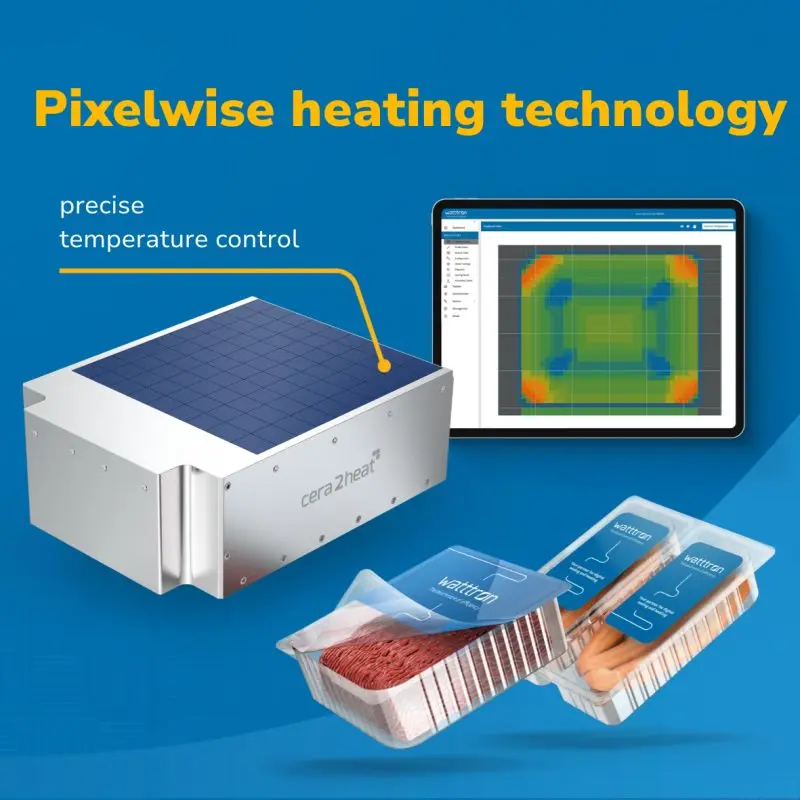
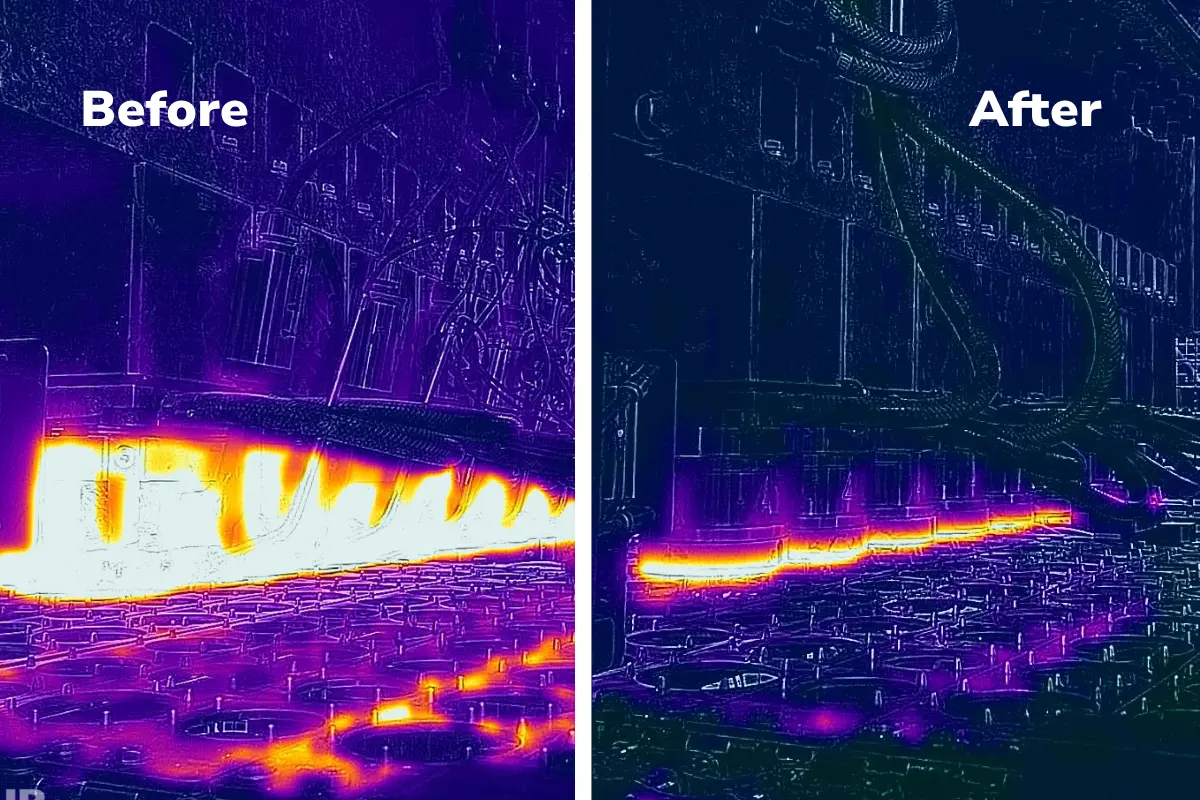
Our patented pixel heating technology enables highly precise, dynamic, and locally controlled temperature management. This allows even demanding mono-material films and sustainable packaging structures to be reliably processed.
Through targeted heat application exactly where it is needed, manufacturers can:
- Improve the forming and sealing quality of recyclable mono-materials
- Reduce material usage through more efficient forming and sealing processes
- Increase process stability and minimize waste
- Achieve high production speeds without compromising precision
- Enable data-driven production processes through integrated sensors in each heating pixel
- Improve quality assurance through pixel-precise monitoring and AI-supported process analysis
The result is a production process that not only meets PPWR requirements but simultaneously increases efficiency, reduces costs, and accelerates the introduction of sustainable packaging solutions.
Frequently Asked Questions About the PPWR
What is the PPWR?
The Packaging and Packaging Waste Regulation (PPWR) is the European regulation for packaging and packaging waste. Its goal is to reduce packaging waste, increase recyclability, and support the transition to a circular economy.
When does the PPWR enter into force?
The regulation has already entered into force. Individual obligations are being implemented in stages. For many packaging manufacturers, the year 2026 represents an important milestone on the path to full compliance.
How does the PPWR affect packaging manufacturers?
Manufacturers must ensure that packaging designs, materials, production processes, and reporting structures meet the new requirements regarding recyclability, recycled content, packaging reduction, and producer responsibility.
Why are mono-material packages so important for the PPWR?
Mono-material packages are generally much easier to recycle than composite materials. Therefore, they play a central role in achieving the recycling and circular economy goals of the PPWR.
Not Just Responding to the PPWR. Leading the Change.
The Packaging and Packaging Waste Regulation is changing the rules of the game for the European packaging industry.
Tomorrow’s market leaders will be those who can efficiently process recyclable materials, reduce waste, and deliver sustainable packaging solutions at scale.
With watttron’s pixel heating technology, packaging manufacturers can increase their product quality, unlock the potential of mono-material packaging, and build future-proof production processes that meet both regulatory and economic requirements.
Do not view the PPWR merely as a regulatory challenge. Use it as an opportunity to differentiate yourself from the competition.
Let us work together to discover how watttron can help your company achieve a sustainable competitive advantage.